

Federal vs Private Student Loans: Which Is Better in 2026? (Complete Guide)
When financing education, students often face the decision between federal and private student loans. Understanding the differences between these two options is crucial for making informed financial decisions.
What Are Federal Student Loans?
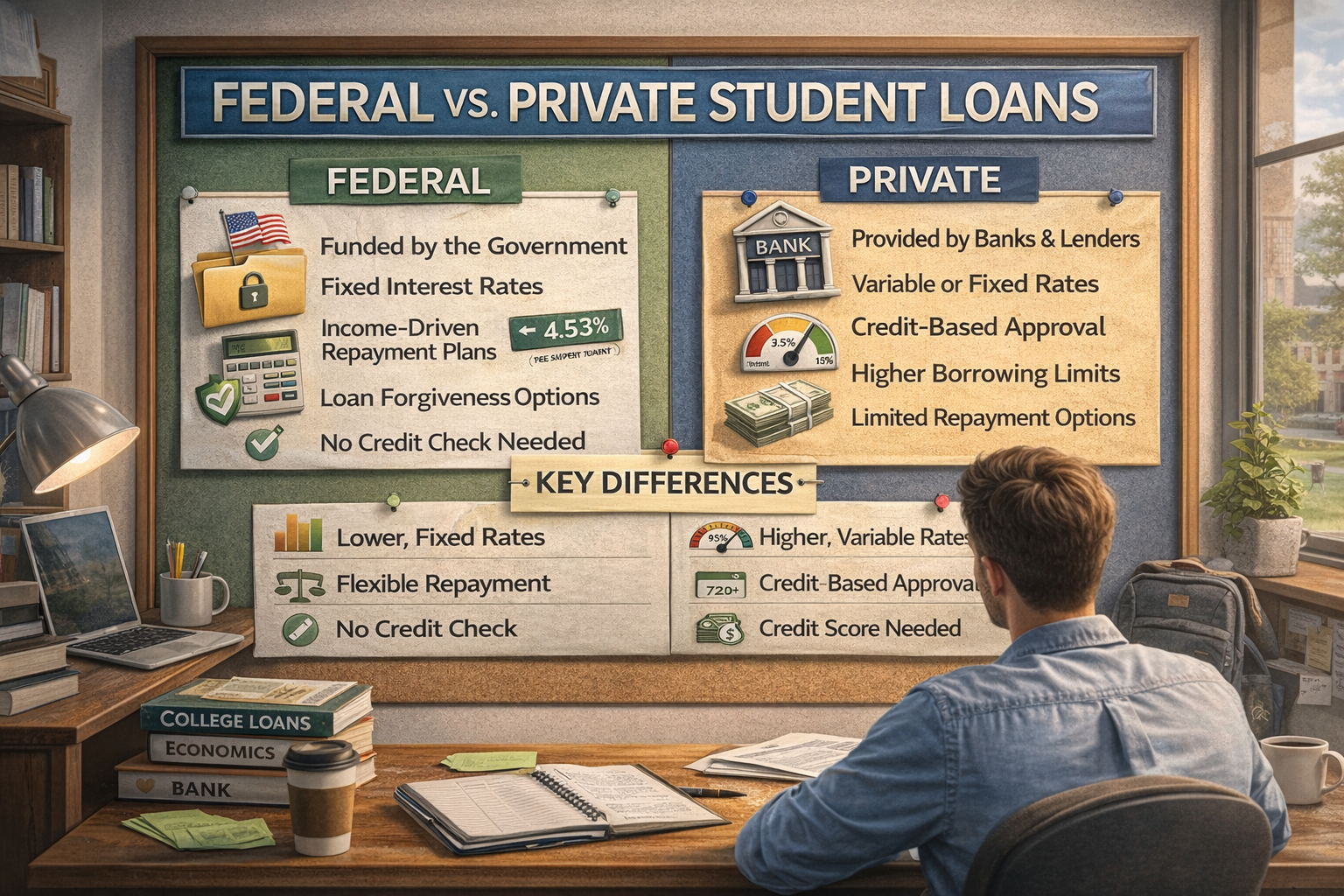
Federal student loans are funded by the government and come with several borrower-friendly benefits. These loans are typically the first choice for students because of their flexibility and lower costs.
Key features include:
- Fixed interest rates
- Income-driven repayment plans
- Loan forgiveness options
- No need for a credit check (in most cases)
What Are Private Student Loans?
Private student loans are provided by banks and financial institutions. These loans are often used when federal loans do not cover the full cost of education.
Key features include:
- Variable or fixed interest rates
- Credit-based approval
- Higher borrowing limits
- Less flexible repayment options
Key Differences
Interest Rates
Federal loans usually offer lower and fixed interest rates, while private loans may have higher or variable rates.
Repayment Flexibility
Federal loans provide income-driven repayment plans, while private loans offer limited flexibility.
Credit Requirements
Federal loans do not require credit checks, whereas private loans depend heavily on credit scores.
Loan Forgiveness
Federal loans may qualify for forgiveness programs, while private loans generally do not.
When to Choose Federal Loans
- If you need flexible repayment options
- If you do not have a strong credit history
- If you want access to loan forgiveness programs
When to Choose Private Loans
- If you need additional funding beyond federal limits
- If you have a strong credit score
- If you can secure a co-signer
Conclusion
Both federal and private student loans have their advantages and disadvantages. Students should carefully evaluate their financial situations and choose the option that best meets their needs.